Your first AI project: pick the win you can measure
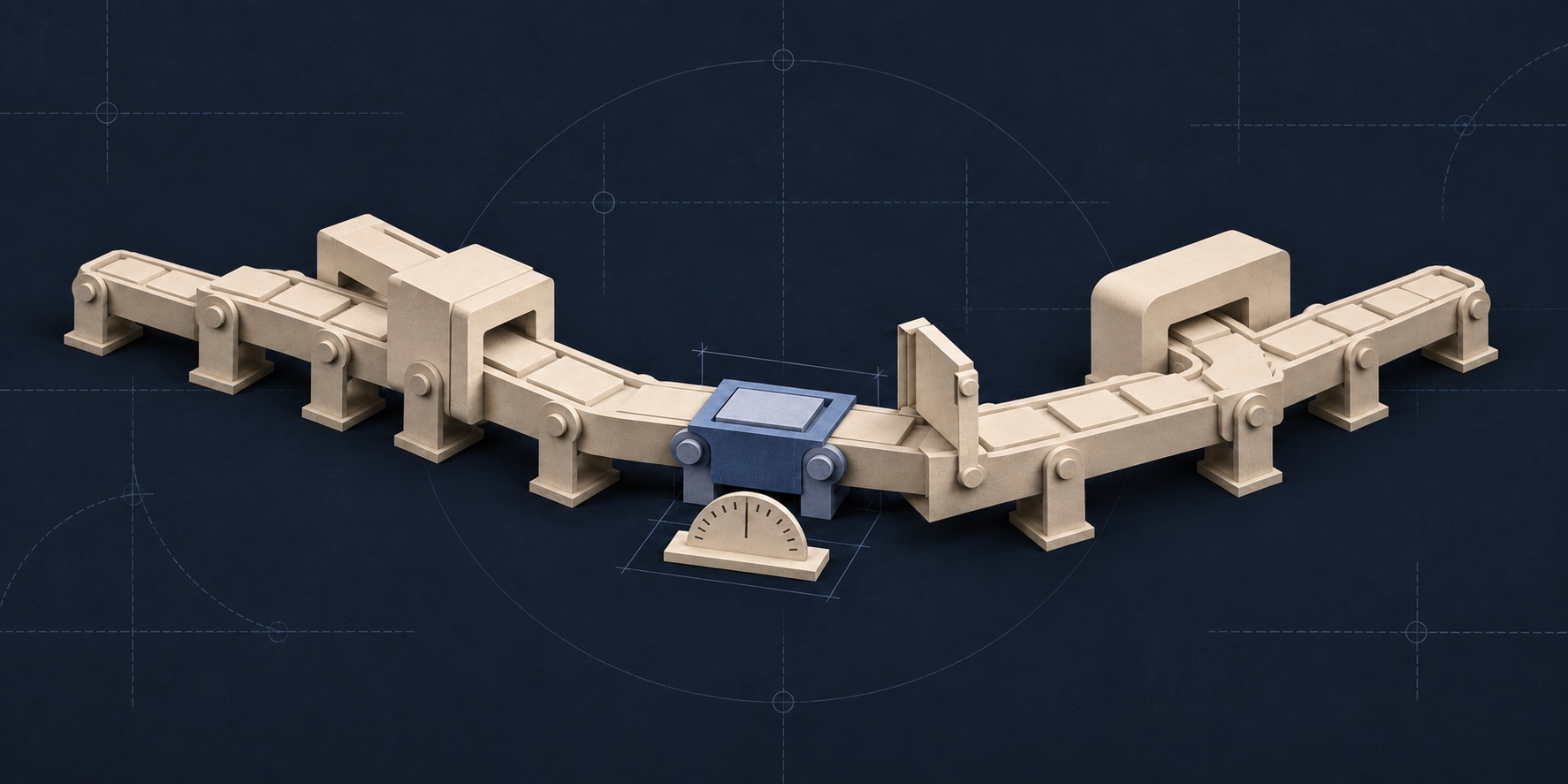
The first AI project in a company decides whether there is a second one. If it ships in weeks and someone can point at a number that moved, the next project gets funded. If it drags for a quarter and ends in a demo, the topic goes quiet for a year.
So the question is not "what is the most ambitious thing we could do with AI." It is "what is the smallest thing we could do that someone would notice."
Start behind the firewall
The best first projects run inside the company, not in front of customers. An internal agent that wakes up on a schedule — every hour, every night — reads what it needs to read, drafts what it needs to draft, and leaves the result for a person to approve.
That shape solves most of the problems that sink first projects before they start:
- Nothing has to be always-on. A scheduled job doesn't need real-time infrastructure or a GPU waiting for traffic.
- Review is built in. A person approves each output before anything happens. Governance is not a separate workstream; it is the workflow.
- The metric is obvious. Hours that used to be spent on the task, and are not anymore.
The candidates are usually sitting in plain sight: the weekly report someone assembles by hand, the meeting notes nobody writes up, the CRM records that drift out of date, the receipts that pile up before reconciliation, the sales signals buried in an email archive. Each of these is weeks of work, not quarters.
The human gate is the important part, and it is temporary by design. Early on, the reviewer catches the omissions and the edge cases, and each correction becomes a rule the agent follows next time. When the corrections approach zero, the gate can come out. Autonomy is something an agent earns.
The data you already have
Before a language model, look at the spreadsheets, application logs, transaction records, and CRM exports the business already produces. Structured data like that powers predictive models that have been boring and reliable for a decade — and boring is what you want in a first project.
Things you can predict with data that already exists:
- Stock availability, so you stop running out and stop over-ordering
- Demand by day or hour, so staffing and inventory follow it
- Infrastructure load, so cloud capacity scales before the spike instead of after it
- Churn, early enough to intervene
- Lead quality, so sales time goes where it converts
Models built with standard libraries — XGBoost, scikit-learn — run in milliseconds, cost almost nothing to serve, and produce outputs a compliance team can inspect. You rarely need a new data pipeline to get started. A well-kept export and a clearly stated objective are often enough.
The right tool, not the fashionable one
A first project teaches something more valuable than the result: which kind of AI fits which kind of problem. Not everything needs a language model, and knowing when it doesn't is a competitive advantage.
Language models earn their place when the input is language: summarising long documents, answering questions across unstructured content, drafting communications that need context, pulling structure out of messy text.
Classic machine learning wins when the input is a table: predictions from structured data, scoring that has to happen in milliseconds, outputs that must be fully explainable, workloads that have to scale cheaply.
The most durable systems combine the two: a fast model for the prediction, a language model for the parts that actually involve reading and writing.
What the companies that get to a second project do
- Bound the problem. An internal process, a clear metric, a scope one team can own.
- Use the data that exists. New data sources are a second project, not a first one.
- Design the gate in from day one. Human review is how stakeholders learn to trust the system — and how the system learns.
- Make the win visible. A number that moved, shown to the people who fund the next one.
- Write down what you learned. Especially what didn't work; it saves the second project a month.
If you suspect AI should be doing more for you but don't know where to start, that is the question the AI Discovery Sprint exists to answer: two weeks, with the engineers who would build it, and you leave knowing which project is first and why.